
Chinese Bearings vs Imported Brands: Cost and Quality Guide
OEM Engineer Quick Reference
- Compatible replacement supply backed by a full traceability code
- Precision grades available up to P2 / ABEC 9
- L10 life validated against real OEM load profiles
- 72-hour answers on non-standard inquiries
Many buyers assume the word imported guarantees authenticity, yet counterfeit risk follows every origin once verification is skipped.
Chinese bearings carrying genuine certification match imported brands in most industrial work at a substantially lower cost, so long as the buyer checks credentials and insists on batch traceability right through. A maintenance manager in Hannover comes back to me often: he held a sealed deep groove ball bearing under the light, pointed at the batch stamp, and understood that the costly substitute feeding his paper mill line could not be traced to any SKF origin. Three calender rolls seized within months. That look, half fury and half embarrassment, travels with me into every quote I write. Leading Chinese manufacturers now run ISO 9001 and IATF 16949 systems, with machining reaching DIN P5 for most industrial duty. Dependable supply and risky supply are divided by verification discipline, not geography.
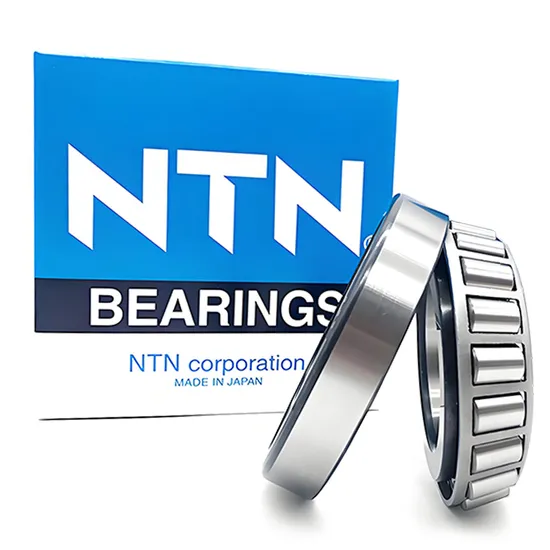
Manufacturing capability has moved far enough that no procurement team can lean on country-of-origin assumptions any longer. Reading this landscape properly means looking at the data on performance, the certification standards behind it, and the sourcing protocols that decide reliability in the field.
- How Do Chinese Bearings Stack Up Against Imported Brands in Industrial Use?
- What Hidden Costs Sit Behind the Imported-or-Chinese Decision?
- Which Quality Metrics Should You Use to Judge Chinese Bearing Suppliers?
- How Do You Source Chinese Bearings for a Specific Industrial Application?
- Conclusion
How Do Chinese Bearings Stack Up Against Imported Brands in Industrial Use?
Certification standards and process control set quality, not the country of origin, and most industrial applications can run Chinese bearings built to DIN P5 with equivalent performance. Old doubts about inconsistency obscure the fact that leading producers now run quality systems rivaling established international brands. The distinction that counts is whether certification is real and whether process control is enforced.
| Performance Metric | Certified Chinese Suppliers | Unverified Suppliers | Imported Brands |
|---|---|---|---|
| Precision Standards | DIN P5 achievable | Uncontrolled | DIN P5 standard |
| Material Quality | 100Cr6 equivalent with controlled purity | Unverified | 100Cr6 verified |
| Heat Treatment | Controlled temperature systems | Standard or uncontrolled | Controlled systems |
| Traceability | Full batch-level documentation | Sample-level or none | Full batch-level |
| Market Position | Substantially growing share | Fragmented | Established share |
A big Australian mine recently set a complete 22324 spherical roller order from a certified Chinese supplier against its usual European brand on conveyor duty. Over an extended test period the Chinese units showed exceptional dimensional accuracy under CMM and turned in L10 results that sat barely behind the imported equivalents. That matched our own QC data: every bearing goes through a full inspection before dispatch, including material certification checks and laser marking authenticity verification inside our ISO 9001 certified process.
The verification process itself is what separates serious suppliers from the rest:
- ISO 9001/IATF 16949 Verification – Confirm standing by querying the official IATF registry yourself, not by reading paperwork a supplier handed you
- Material Traceability – Request mill certificates whose heat lot numbers trace back to the raw material suppliers
- Precision Grading – Call out DIN P5 or ABEC-7 wherever tolerances run tight
- Manufacturing Process Audit – Review supplier paperwork on heat treatment, grinding, and assembly
- Failure Analysis Support – Make sure suppliers issue technical reports on any premature failure
What Hidden Costs Sit Behind the Imported-or-Chinese Decision?
Ownership cost analysis shows Chinese bearings saving substantially once fast delivery, reduced downtime, and removed counterfeit risk are counted, which often outweighs the perceived safety of an imported label. Purchase price is only one component; delivery time, downtime expense, and counterfeit exposure carry financial consequences most buyers overlook.
| Cost Factor | Common Mistake | Strategic Approach |
|---|---|---|
| Procurement Cost | Focusing solely on per-unit price without verifying certification | Evaluating TCO including failure rates and delivery reliability |
| Lead Time | Accepting extended import timelines as unavoidable | Sourcing from suppliers with substantial local inventory for rapid delivery |
| Counterfeit Risk | Assuming "imported" guarantees authenticity | Implementing multi-step verification: material certification, laser marking inspection, batch test reports |
| Maintenance Expense | Replacing bearings on fixed schedules rather than condition-based monitoring | Utilizing supplier-provided failure analysis to optimize replacement intervals |
A copper mine in South America shows it clearly. Imported bearings kept failing early in their SAG mill and annual downtime costs were substantial. Once they standardized on our 240/800 CAK30/W33 spherical rollers, shipped quickly and built with extra salt-spray corrosion resistance, mean time between failures improved significantly. Lower procurement cost plus reduced downtime produced substantial annual savings even with a similar upfront investment.
A sound TCO model needs attention on several factors:
- Downtime Cost Calculation – Quantify lost output per hour so delivery speed is weighted properly
- Counterfeit Risk Assessment – Apply verification protocols to all imported bearings, whatever the origin
- Lead Time Optimization – Build local inventory programs for critical sizes to cut emergency freight
- Failure Analysis Budget – Set resources aside for root cause work instead of repeated replacement
- Lifecycle Cost Modeling – Compare multi-year totals covering installation, maintenance, and downtime
Counterfeit risk deserves special weight. Buyers tend to assume imported bearings are authentic by definition, yet counterfeit product moves through every kind of supply chain in the global bearing trade. Without proper verification, meaning lot numbers traceable into maker files, material certificates showing heat lot lineage, and checks on laser marking authenticity, the exposure is identical whether a bearing comes from China, Europe, or anywhere else.
Which Quality Metrics Should You Use to Judge Chinese Bearing Suppliers?
A valid ISO or IATF certificate, batch traceability from steel lot to finished bearing, and application-specific testing separate dependable suppliers from the rest. As China's bearing market expands quickly, telling manufacturers apart takes a hard audit of quality management systems rather than trust in a brand name.
| Evaluation Criteria | Reliable Supplier | Questionable Supplier |
|---|---|---|
| ISO 9001/IATF 16949 Certification | Verifiable in official databases | Self-reported only |
| Full Traceability Documentation | Batch codes linked to raw material lots | Partial or no traceability |
| Application-Specific Testing | Available for harsh environments | Generic testing only |
| Anti-Counterfeiting Measures | Multi-layer verification system | Minimal or none |
| Technical Support Capabilities | Application engineering collaboration | Order-taking only |
Our work with a European wind energy OEM shows the evaluation in practice. Their task was validating hybrid ceramic angular contact ball bearings to ABEC-7 tolerance for gearboxes where raceway roundness must hold within microns. We supplied complete traceability from raw material certification through manufacturing, including extended qualification testing with independent lab reports. That documentation, alongside our ISO 113:2010 compliance, let them meet IEC 61400-4 while achieving significant cost savings.
The evaluation framework should cover these steps:
- Certification Verification – Cross-check credentials in the official ISO and IATF databases
- Batch Traceability – Require unique lot codes tying finished product to raw material lots
- Dimensional Inspection – Request CMM reports on critical tolerance measurements
- Material Analysis – Verify chemistry along with hardness results
- Performance Testing – Review data on fatigue life, corrosion resistance, and temperature limits
As an independent supplier of compatible replacement bearings, we keep batch numbers verifiable against maker records on every shipment. That traceability extends to rare designations, including large bore specials, C4 clearance jobs, and hybrid ceramic variants, which factories usually need weeks to produce. Our Wuxi stock lets us dispatch these hard-to-find items quickly, so maintenance teams are not pushed into risky substitutions by long lead times.
How Do You Source Chinese Bearings for a Specific Industrial Application?
A qualification process run in order, with application engineering collaboration behind it, secures both the right bearing selection and stable long-term supply. Strategic buyers treat Chinese suppliers as technical partners able to optimize selection for specific operating conditions rather than as interchangeable vendors.
| Verification Step | Required Documentation |
|---|---|
| Supplier Qualification | ISO/IATF certificates, manufacturing facility audit report, quality management system documentation |
| Product Validation | Material test certificates, dimensional inspection reports, precision grading verification |
| Trial Order Assessment | Batch traceability package, installation support, performance monitoring protocol |
| Long-term Agreement | Supply stability guarantees, pricing framework, failure analysis commitment |
A steel mill in Southeast Asia shows the value of the structured approach. Careful qualification covering steel verification, dimension checks, and field trials over an extended period let them switch to traceable Chinese spherical rollers and strip out substantial unplanned downtime. Collaboration between their maintenance engineers and our application specialists got the selection right for conditions that combine high temperature, heavy load, and contaminated surroundings.
The sourcing process should run through these phases:
- Initial Qualification – Verify credentials, plant capability, and quality systems from documented evidence plus database cross-checks
- Application Engineering Review – Work with supplier technical staff to validate selection against load, speed, temperature, and contamination levels
- Trial Implementation – Prove the bearings in a controlled run on non-critical positions before extending to mission-critical equipment
- Performance Monitoring – Set up condition monitoring and failure analysis procedures to keep refining selection and replacement intervals
- Supply Agreement Development – Move to long-term supply once performance is validated, locking in pricing stability and delivery commitments
The clearest insight from years of supporting manufacturers across regions is that successful sourcing, Chinese or imported, rests on verification discipline rather than assumptions about origin. Buyers who run rigorous qualification, demand full traceability, and collaborate on application engineering consistently do better than those who chase the lowest unit price or assume an imported brand guarantees reliability.
Conclusion
Certified Chinese bearings deliver performance that equals imported brands across most industrial duties when buyers verify credentials and demand batch traceability throughout. Ownership cost analysis keeps favoring properly sourced Chinese bearings through lower procurement cost, faster delivery, and removed counterfeit risk. The route to dependable supply runs through structured qualification, collaboration on application engineering, and verification that continues after commissioning, never through outdated assumptions about where a bearing was made.
Browse Compatible NTN-Interchange Bearing Models →
Live WMS stock levels, traceability files with each lot, and OEM-grade packaging.
Need a quote for a specific bearing designation? Our engineers reply within one business day.
Request a quote