
How to Request and Evaluate Bearing Samples from Chinese Suppliers
OEM Engineer Quick Reference
- Compatible replacement supply backed by a full traceability code
- Precision grades available up to P2 / ABEC 9
- L10 life validated against real OEM load profiles
- 72-hour answers on non-standard inquiries
Surface checks miss most of the defects that cause bearings to fail early in the field. Judging samples from Chinese suppliers by appearance and a couple of measurements leaves the whole production line exposed, particularly with specialized parts that must hold up for years under extreme loads.
A structured sample evaluation with China-based suppliers, covering traceability checks, application-specific testing, and a review of technical documentation, cuts bulk order risk substantially while keeping you aligned with industrial quality standards and project schedules. Qualifying samples properly brings downtime down and lowers ownership cost across the product lifecycle.
Incoming inspection came first for me, on the shop floor of a bearing warehouse in Ningbo, where reading batch codes and tolerance stamps came before drafting a quotation email. Then came a Brazilian mining order for spherical roller bearings that we shipped without samples; the lot reached Santos with its seal lips damaged by poor pre-lubrication and was rejected outright. That loss taught me sample evaluation is a checkpoint, not a courtesy. Later, a European wind turbine maker needed main shaft bearings validated for their units, and our structured process exposed a gap in material certification that would have ended in gearbox failure long before the target service life.
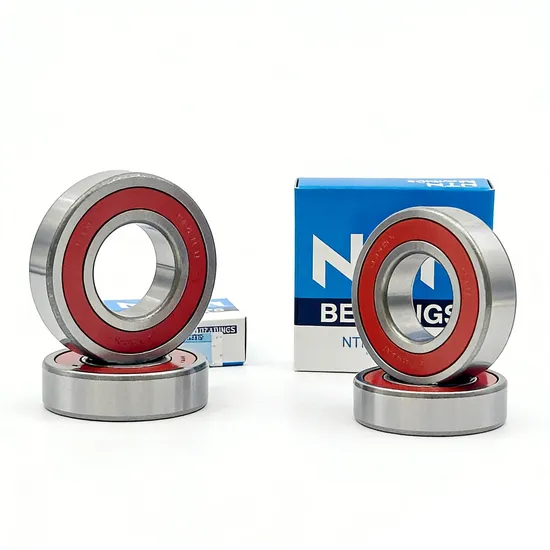
The framework below turns sample evaluation from a box-ticking step into a risk control tool that protects production and reputation.
- Why Does Skipping Sample Evaluation Put a Bulk Order at Risk?
- Which Criteria Actually Matter When Judging Bearing Samples?
- How Should Custom Bearing Samples Be Requested for Specialized Applications?
- What Documentation Proves Bulk Order Quality from Chinese Suppliers?
- Conclusion
Why Does Skipping Sample Evaluation Put a Bulk Order at Risk?
Industry audits put counterfeits at a significant share of industrial bearing imports from China. That hidden exposure means even established suppliers can source from unauthorized plants without knowing it. The cost runs past replacement parts: one automotive components maker reported losses in six figures once counterfeit tapered rollers broke down during assembly, forcing a full line shutdown plus a product recall.
| Risk Factor | Industry Impact |
|---|---|
| Counterfeit Components | Substantially higher failure rate within first operating hours |
| Material Substitution | Noticeably reduced fatigue life when non-specified steel grades are used |
| Inconsistent Manufacturing | Significant variance in critical dimensions between sample and bulk production for non-certified suppliers |
| Documentation Fraud | Multiple suppliers fail third-party audits for certificate authenticity |
A mining client learned this the hard way. After approving samples on dimensional checks alone, they hit repeated crusher bearing failures at their mineral processing plant. Root cause analysis showed the production lot used 100CrMnSi6-4 where 100Cr6 had been specified, trimming load capacity noticeably. Our engineers produced a full report within days, identified the material switch, and supplied emergency replacements: 22330 CA/W33 spherical rollers with C3 clearance machined for thermal growth, flown in to keep downtime short.
- Run Failure Mode Analysis – Identify the critical failure points in your application before you judge any sample
- Set Baseline Requirements – Define minimum performance thresholds from load, speed, and environmental conditions
- Accreditation Check – Confirm ISO 9001/IATF 16949 status by ringing the registries yourself
- Implement Dual-Sourcing – Qualify at least two suppliers so a disruption does not stop you
- Calculate Total Cost Impact – Build likely downtime and replacement costs into the sample evaluation budget
Which Criteria Actually Matter When Judging Bearing Samples?
Precision grades under ISO 492 describe only half the picture; what a bearing can really do shows up in application testing. Many buyers fixate on dimensional accuracy when judging samples from Chinese suppliers, but our engineers keep finding that how clearance is set and how the steel is heat treated matter more in service. On wind turbine gearbox bearings, getting radial clearance right alone can meaningfully extend service life under variable load.
| Evaluation Dimension | Common Mistake | Correct Approach |
|---|---|---|
| Traceability | Accepting generic batch codes without manufacturer verification | Requiring full certification chain from raw material to finished product with original mill test reports |
| Dimensional Measurement | Using calipers for critical tolerance checks | Employing calibrated equipment to ISO 1132-1 standards with documented measurement protocols |
| Material Analysis | Skipping hardness testing on sample components | Conducting Rockwell C hardness testing at multiple points per raceway with microstructure examination |
| Performance Validation | Relying on supplier-provided test data | Conducting independent load testing simulating actual operating conditions |
| Anti-Counterfeiting | Visual inspection of branding only | Verifying unique manufacturer identifiers through supplier's authentication system |
Self-run warehousing at our end keeps full traceability on every bearing, from the raw material certificate right through to final inspection reports. A port infrastructure EPC project needed DNV-certified marine bearings for a coastal development, and we handed over a package containing material test reports, the heat treatment records, and traceability logs spanning the whole order. That satisfied DNV GL requirements and kept customs clearance smooth across a phased delivery schedule.
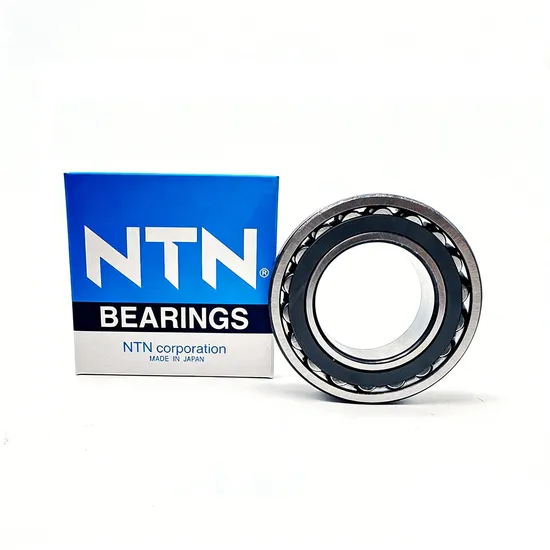
- Verify Batch Traceability – Ask for the original manufacturer lot codes and check them against production records
- Conduct Dimensional Inspection – Measure critical dimensions with certified equipment and uncertainty analysis
- Material Testing – Validate hardness, microstructure, and chemistry against the spec sheet
- Evaluate Surface Finish – Inspect for grinding burns, chatter marks, and similar defects with profilometry
- Validate Lubrication Quality – Analyze grease composition and fill quantity on sealed units
How Should Custom Bearing Samples Be Requested for Specialized Applications?
Standard samples seldom represent modified production parts. The mining client above first asked for standard spherical roller bearings, and our application engineers recommended C3 clearance to absorb thermal expansion in the crusher. That single adjustment prevented a long list of unscheduled shutdowns in the first year alone.
| Customization Type | Technical Advantage | Ideal Application Scenario |
|---|---|---|
| Clearance Modification | Optimizes performance under temperature fluctuations | Wind turbine gearboxes, mining crushers, high-speed spindles |
| Material Substitution | Enhances corrosion resistance or load capacity | Marine applications, food processing, extreme temperature environments |
| Precision Grade Upgrades | Reduces vibration and noise levels | CNC machine tools, medical equipment, precision conveyors |
| Sealing Configuration | Improves contamination resistance | Agricultural machinery, construction equipment, dusty environments |
| Lubrication Customization | Extends maintenance intervals | Remote installations, offshore platforms, hard-to-access locations |
A European agricultural machinery OEM came to us for custom flange units built with triple-lip seals plus food-grade grease. The specification template we built captured the material (440C stainless), grade (P6), clearance (C2), seal style (TCN), and grease (NSF H1 registered). Doing that upfront meant the samples represented bulk production accurately, and our custom sample lead time lined up with their development schedule.
- Define Application Parameters – Capture load, speed, temperature range, and environmental exposure
- Specify Material Requirements – State steel grade, heat treatment, and any coating needed
- Detail Precision Requirements – Set the ISO grade, clearance group, and runout tolerance
- Request Engineering Drawings – Obtain CAD files with the critical dimensions called out
- Establish Approval Protocol – Write clear acceptance criteria for the sample results
What Documentation Proves Bulk Order Quality from Chinese Suppliers?
Thorough documentation is not just a compliance box; it is your guarantee of consistency. Across many bulk bearing orders we have seen that suppliers unable to hand over a complete document package upfront are far more likely to run into quality problems in production. That matters most in sectors like wind energy, where one bearing failure can cost several times what a cheaper procurement saved.
The package should contain:
- Material Test Reports – Original mill certificates listing chemistry and mechanical properties
- Heat Treatment Records – Temperature profiles plus hardness results per lot
- Dimensional Inspection Reports – Critical dimensions with uncertainty analysis to ISO 15243
- Batch Traceability Logs – The full chain from raw material to finished bearing with unique identifiers
- Certificate of Origin – Needed for customs clearance and project compliance
- Third-Party Inspection Reports – Independent verification where the buyer asks for it
Our batch traceability system lets every bearing be checked against maker records, backed by original mill test reports and verifiable batch codes, which closes off the documentation fraud risk. When you evaluate samples from Chinese suppliers, ask for that package at the start; a supplier who hesitates or sends something incomplete should be flagged immediately.
Conclusion
Ending the sample stage without a decision is a formality, not a checkpoint, and it is the most important gate between choosing a supplier and committing to a bulk order. A structured approach covering traceability, application testing, and thorough document review turns that gate from a risk into an advantage, protecting the line and lowering the cost of ownership across the bearing life.
Browse Compatible NTN-Interchange Bearing Models →
Live WMS stock levels, traceability files with each lot, and OEM-grade packaging.
Need a quote for a specific bearing designation? Our engineers reply within one business day.
Request a quote